Hmmmm. It would be sad to see Audacity loose its character.
So far MuseScore had benefited from more structured and focused development. I hope this continues for all the products under the Muse umbrella.
I’ve heard that community created scores were “privatised” in the same Time.
There was a bit of a storm about telemetry and personal details last month but my understanding is that Muse Group have added an option to Audacity to enable telemetry which is disabled by default. I don’t see an issue with giving users the option to provide data to improve the product if they wish to do so.
Good to be aware of these things.
Matt Bellamy has his fingers in everything these days!!!
Perhaps not completely evil. The Dev Lead seems fairly sensible as he rolls out Musescore 4 and seems to be going to use a similar approach to revamp Audacity.

Some background on Audacity

Apparently Developers have difficulties …..
I suggest if you use Audacity then this is essential watching . . .
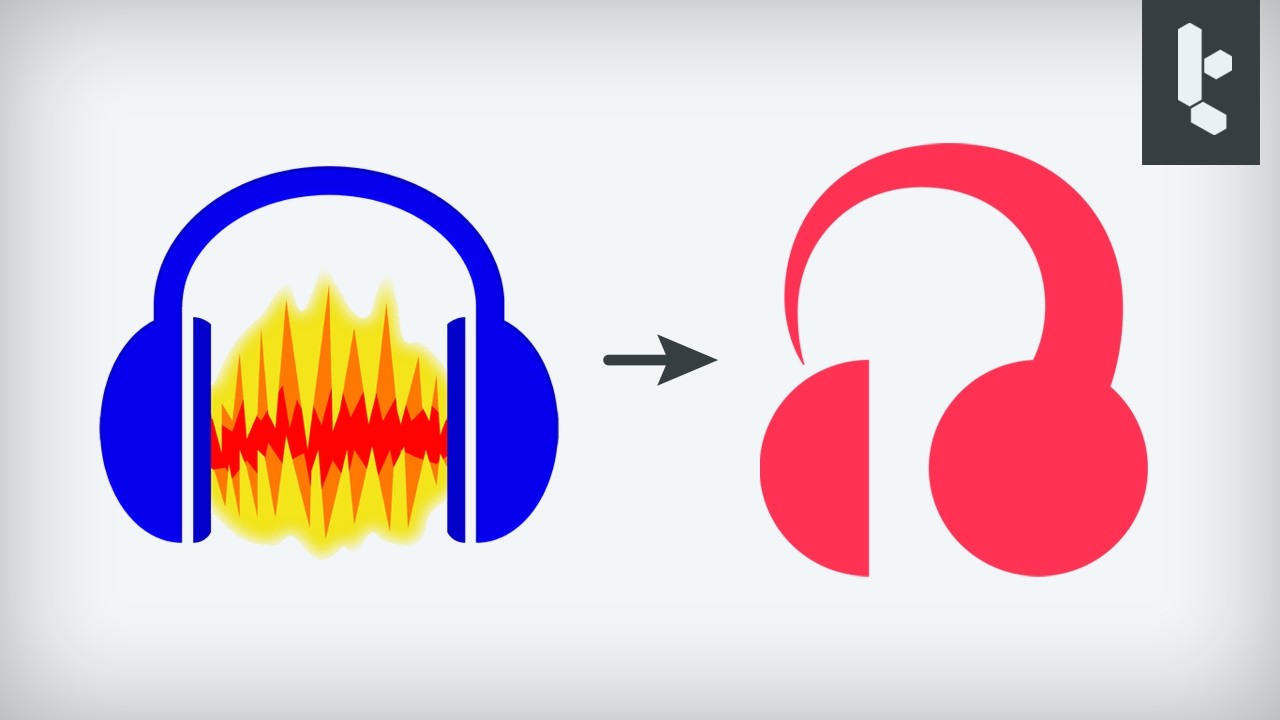
Tantacrul does some really good opinionated and clear explanations of the changes and theory/reasons behind them on the projects and other things on which he is working or interested. He is also the lead dev on Musescore.
First time I’ve come across him…
Just working thru’ this….
Two observations around musescore - observed when i thought about giving it another go:
- i could not in any way i could imagine pay the subscription.
- while trying this i was frequently popped up with a notice about more and more discount. Every time i, after trying to pay clicked the cancel button, and on the subsequent questionnaire answered; other reason - not able to get the payment through
they offered me another discount.
It makes me crumble inside to be subjected to something like this kind of behavior from a machine. I’d rather receive ONE discount as a returning long time customer.
Is there a question to the community here? Well maybe then it would be;
Are there any alternatives to Musescore, that is focused on classic notation, and works more or less like Musescore. Hopefully not to costly, and preferrable with a minimum of popups, adverts and similar trickery?
Utmost regards,
Hi @core.east,
As someone who works extensively with notation software, I think that I can maybe try to throw a couple of answers to your legitimate question.
Music engraving apps are coding-intensive, conceptually complex and very demanding to program and maintain. That is why there is little really functional in the open-source or freeware world, even less if we restrict the field to Linux compatible applications.
MuseScore is definitely growing in quality, and is subplanting its commercial competitors in many educational environments, being the only music notation software which (for now) is still usable in totally free terms. It features a well-designed interface, and avoids useless excesses of configuration options, being mostly aimed at composers and musicians. Its (free) stock provision of resident sample libraries is already more than sufficient for semi-professional mock-ups, and more than enough for purely compositional purposes. Moreover, there is a growing (both payless and really affordable) offer of added instrumental libraries, some of them from renowned brands like Orchestral Tools.
So what’s not to be liked?  . I employ MuseScore with great satisfaction and good results, especially in mobility fashion because is very lightweight. Its owners/devs show clear signs of a progressive (or prospective) shift towards some kind of paid usage, through subscription, but I deem this still rather far on the horizon, and probably it will be quite cheap anyway.
Thinking in the longer view, my advice for a serious compositional tool aimed at classical music is to resign to buy Dorico, and update it more or less regularly. It isn’t exactly affordable, and is less intuitive and more pro-engraving oriented than MuseScore, but it works gorgeously, is the new golden standard for notation, and learning it would iron out your workflow for years to come.
I didn’t even mention the rather amateurish Harmony Assistant, a paid software which I have extensively used in the past, before abandoning it completely for Sibelius, that used to have a great user-friendly interface thought for composers, but now it’s been for years a pretty dead product (long story for another thread and another time, about multinational companies taking the lead of once dearly loved brainchilds).
Regards!
Well, i did some research and found some alternative forks that could be interesting to test:
1.) MuseScore 3 Evolution is an actively maintained fork of MuseScore 3.X:
It is 1323 commits ahead of the official 3.X branch and the latest one is from yesterday, so yes, it seems there are, at less, a few people interested on keeping alive the 3.X version.
Click here to read more about the goals and motivations of this fork.
The main maintainer is this guy:
who is a frequent contributor to the official Musescore repos too.
2.) LibreScore is defined as “The open source (GPLv3), serverless, offline-first, and totally free alternative to musescore.com”
I didn’t test any of them, but i probably would bet for the “Evolution” fork.
All the best,
I love you guys. I will dig into this the next couple of weeks. Thanks for the inputs!
FYI, i used this tool to do my little research:
Github removed this functionality from his GUI some time ago, but it’s still in the API, so someone created this little tool. Nice!
Regards,
Hmmm… Interesting @jofemodo. I didn’t know of LibreScore, which will download and test for curiosity within the weekend!
Now, reviving an old idea of mine - which I already proposed in some thread around here -, would there maybe be a someone adventurous, among the Zynthian main devs, daring enough to try and compile any of the two programs for Arm64 on Zynthian?… 
I mean, from a 7” screen onwards it would make for a lovely in-the-box notation software. Not to mention that, coincidentally, I happen to have a custom Pi5 Zynth with 16” touch, which could easily offer a comfortable abode for such an application…
PS: That would also require, of course, the integration of the notation window in the Zynth GUI and UX, which is probably not a menial thing to achieve.
Cheers!
And here’s me wondering if a 10” touchscreen would be too much 
Regarding Muse Group, I straight up do not trust publicly owned companies to do anything other than chase profits and “line goes up”.
So, I’m just waiting to see when, not if, they start applying pressure.