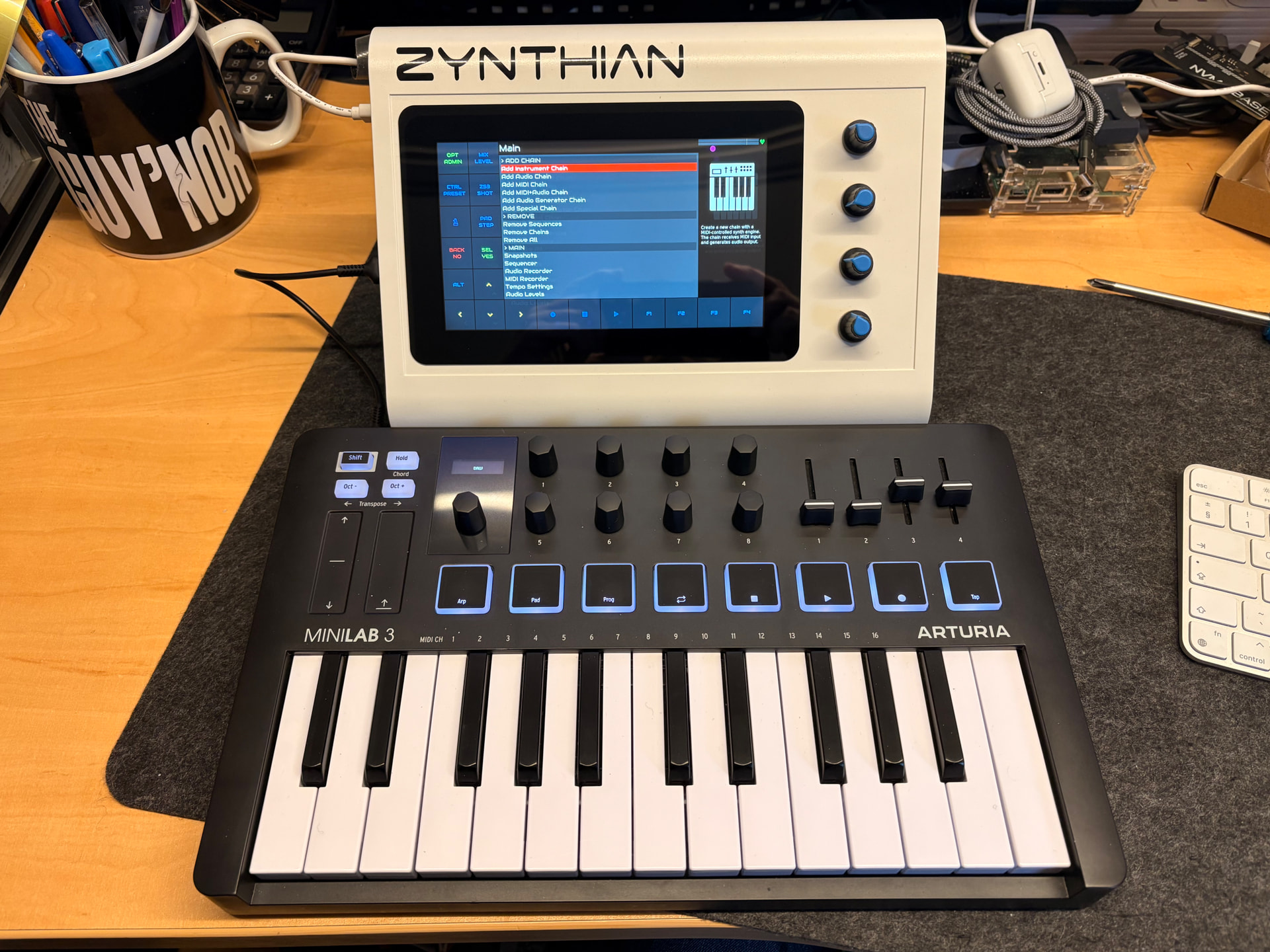
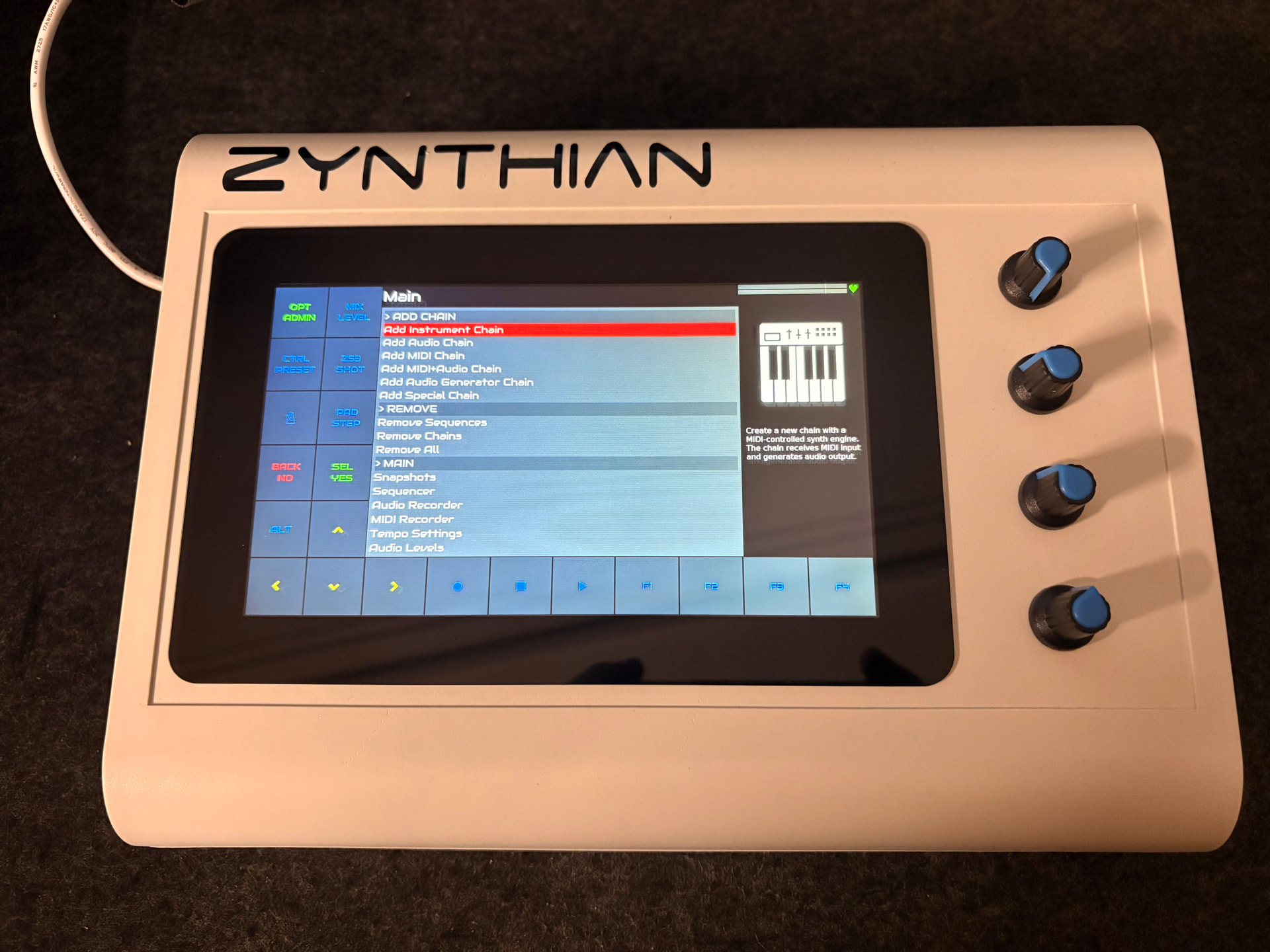
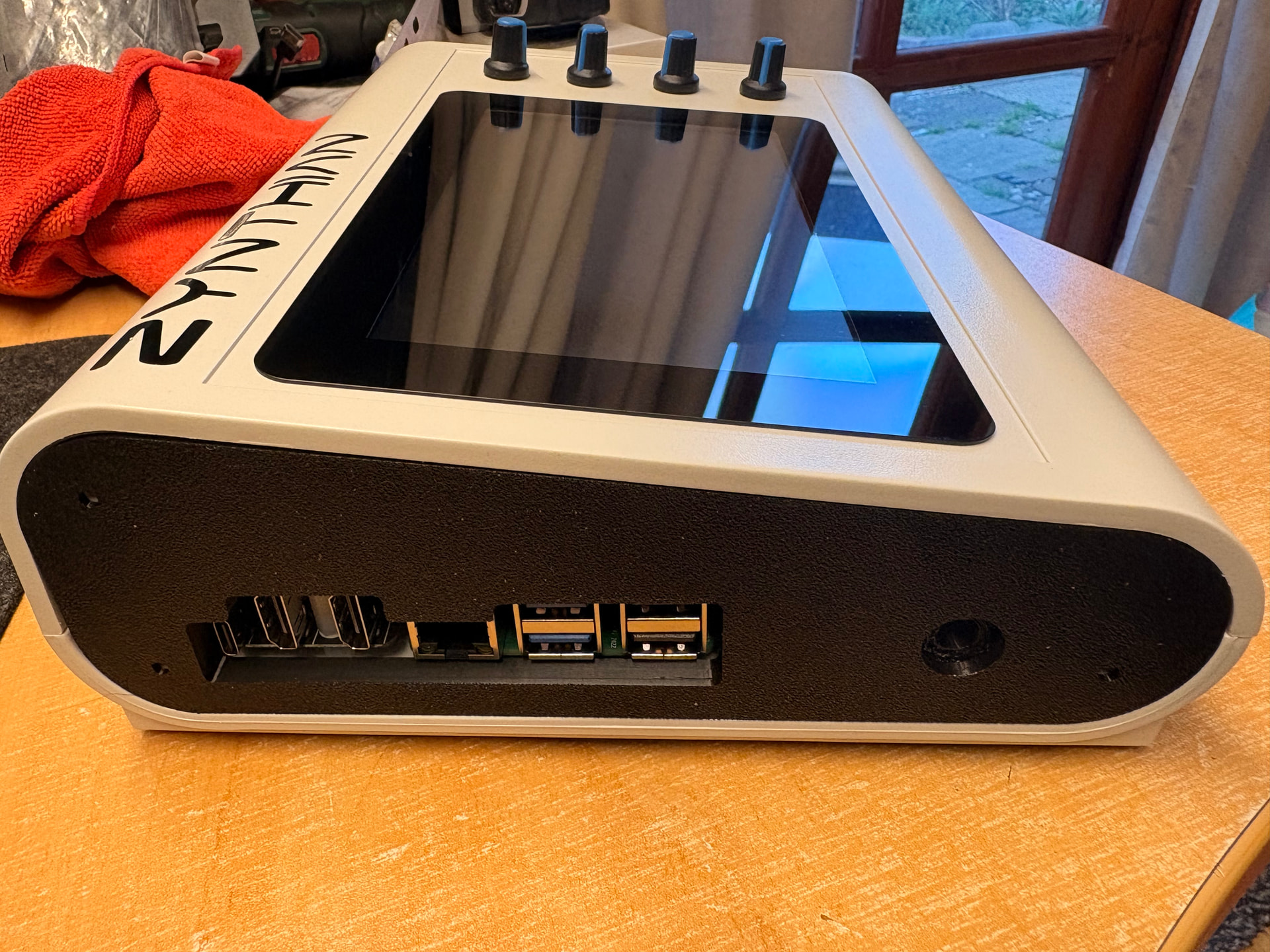
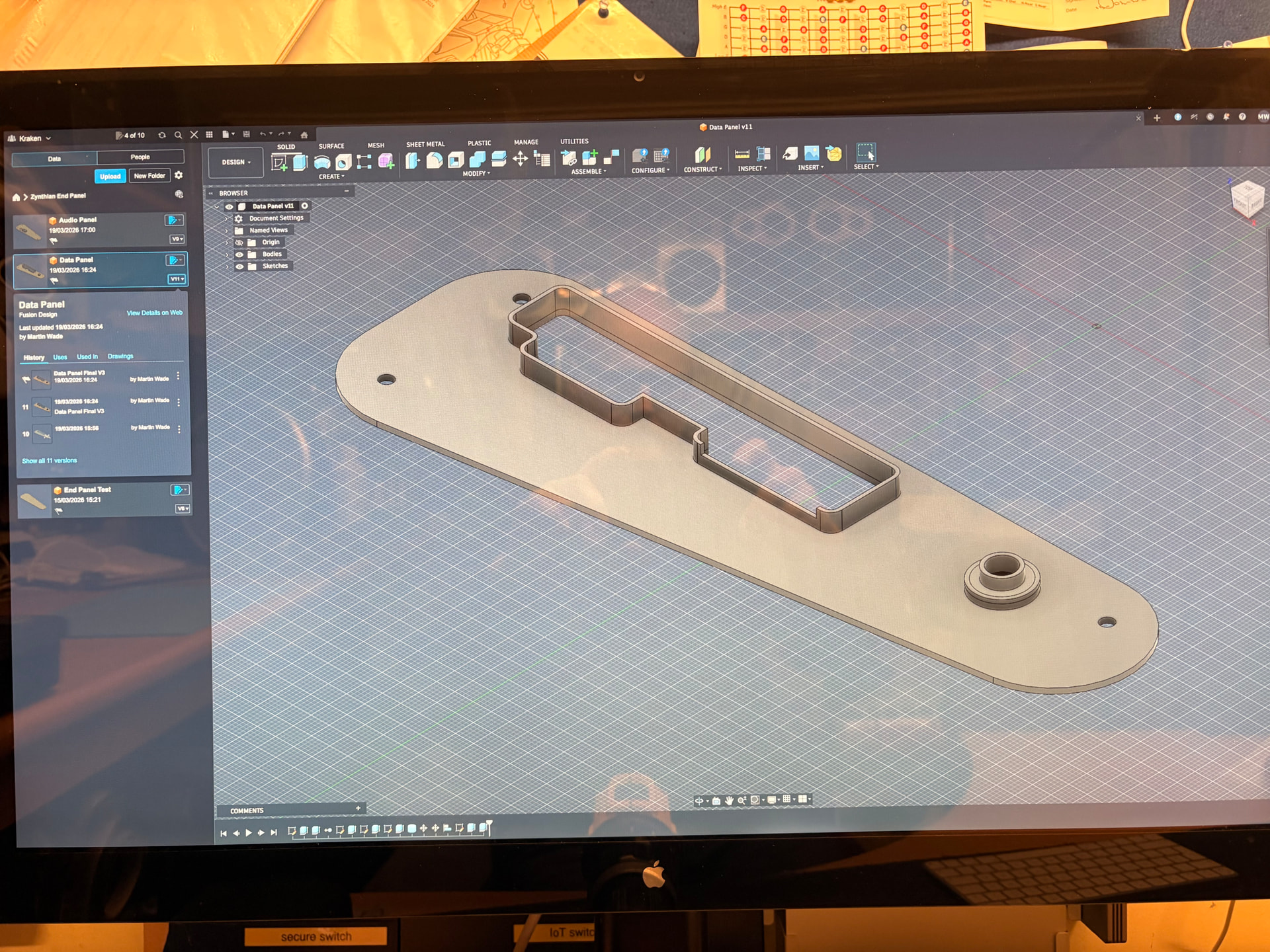
I’ve just finished building my v5 diy zynthian hardware based on
RPi5 8Gb
Waveshare Micro hdmi Connector adapter board
official 7” touch display 2
official Pi DAC+
SupTronics X1015 NVMe add-on with 256Gb m.2 NVME drive
Adafruit MCP23017 I2C GPIO expander
4x DollaTek rotary encoders with incorporated debounce PCB
Arturia Minilab midi controller
I installed that latest ORAM build and after a bit of testing and configuration I’m basically up and working with all 4 encoders working as they should and using onscreen touch keys to replace the hardware buttons on the official kit.
I have a couple of questions
I’ve seen the dire warnings on using the new Vangelis builds due to the risk to anyone’s existing workflow and backup recovery, but as a completely new user, with only hardware configuration at risk, would you recommend sticking with Omar for now, or jump straight into Vangelis, as it’s the future … do some people dual boot the two?
As a completely ne wiser to both zynthian and synthesis/ groove boxes/ plugins/ daws (well you get the idea), are there any recommended
resources to get up to speed as quickly as possible? Ideally I’d like to get stuck into zynthian as part of this journey, but if there’s something simpler I need to do to ensure I can walk before I trying to run … let me know.
Finally, I haven’t added a true midi interface or audio in which I notice the official unit has, but I assume unless you need to connect to other midi devices to use zynthian as an effects unit, these aren’t really necessary, at least for me at this stage as have neither.
Cheers and thanks for a great resource and to the the devs for an awesome project
Welcome @martin99. That is a neat looking DIY project.
Oram is the stable release and is unlikely to change. It is effectively in maintenance mode. This is our recommended version for production use. There is a (incomplete) user guide on the wiki.
Vangelis is the development version. It is the bleeding edge which may change and break at any time. We try to keep it operational but that didn’t always happen.
It is recommended to have a stable version and testing version on separate boot media. You could install Vangelis on the NVMe and use uSD or USB for Oram.
There is a lot of work going on with Vangelis with no guarantee of compatibility through it’s development cycle. We love having users testing it. It’s published early and updated regularly to allow early preview of the future release.
Almost all chatter of new features is related to Vangelis and the workflows are improved, but still evolving. You will sometimes find things suboptimal or in a state of flux. We may try something then abandon it or change it.
Lots of users are trying Vangelis and there is much support but you shouldn’t expect to be dug out of holes.
The choice is yours. If you want to use the box for real work then Oram may be a better choice. You could use Vangelis and avoid updating if you have it working sufficiently or are worried about breakage.
Thanks Brian for the guidance … I think I’ll do as suggested and install Vangelis on the NVMe and Osram on the micro-sd. This should let me learn with the development of the new release but have a fallback to use the current release if stability is the priority. As I’m at the initial learning stage I don’t suppose I’ll have anything too precious for some time yet. I’ll also keep the wiki to hand as I can see that it’s a huge resource of information.
Out of curiosity … is there a target timeline that you’re aiming for to get v1.0 launched, or given the nature of the development and developers time, it’ll just be done when it’s done?
Cheers and thanks for an awesome project to all involved.