Sorry, my topic is a little off-topic, but since this forum (and pretty much everywhere else) occasionally covers programming with the help of AI, I thought I’d ask the group:
How do you use AI? Or more specifically: which service providers (please no big ads, just the name) or maybe even local ones?
Which models do you use for programming?
Do you use Skills?
Do you use a specific agent?
I’m really curious and would love to share experiences with you. Fernando has already revealed some of his AI secrets at Virtual Zynthian Demo - #15 by jofemodo
I’m going to get started right away and share my insights here.
I can use the Academic Cloud. It offers several free plans and provides both web chat and API access. It’s free for me, but there’s a daily token limit, which I sometimes reach.
I’ve had a good experience with Qwen3-Coder-Next. Qwen-3.8-27B was also pretty good for Python programs.
No, not yet.
I’ve switched from VS Code and am now using ZED as my editor. It has a built-in agent that I’ve found to be pretty good so far. I’ve also tried OpenCode—I thought that was pretty good, too.
For Python programming, this combination works well for me and, above all, is affordable. However, I’m looking for a way to work on complete projects using AI—something I haven’t been able to do with my current setup. Unfortunately, with my AI, the Context window is too small for larger projects.
I’m a retired software engineer, so I don’t program for a living any more. I like programming, spending hours just coding and solving problems has a Zen effect on me, it’s very relaxing. I don’t want to delegate that to AI.
On the other hand, sometimes I’m completely stuck on some technical issue and I can’t find an answer on Stack Overflow and it’s colleagues. Then AI can come in handy.
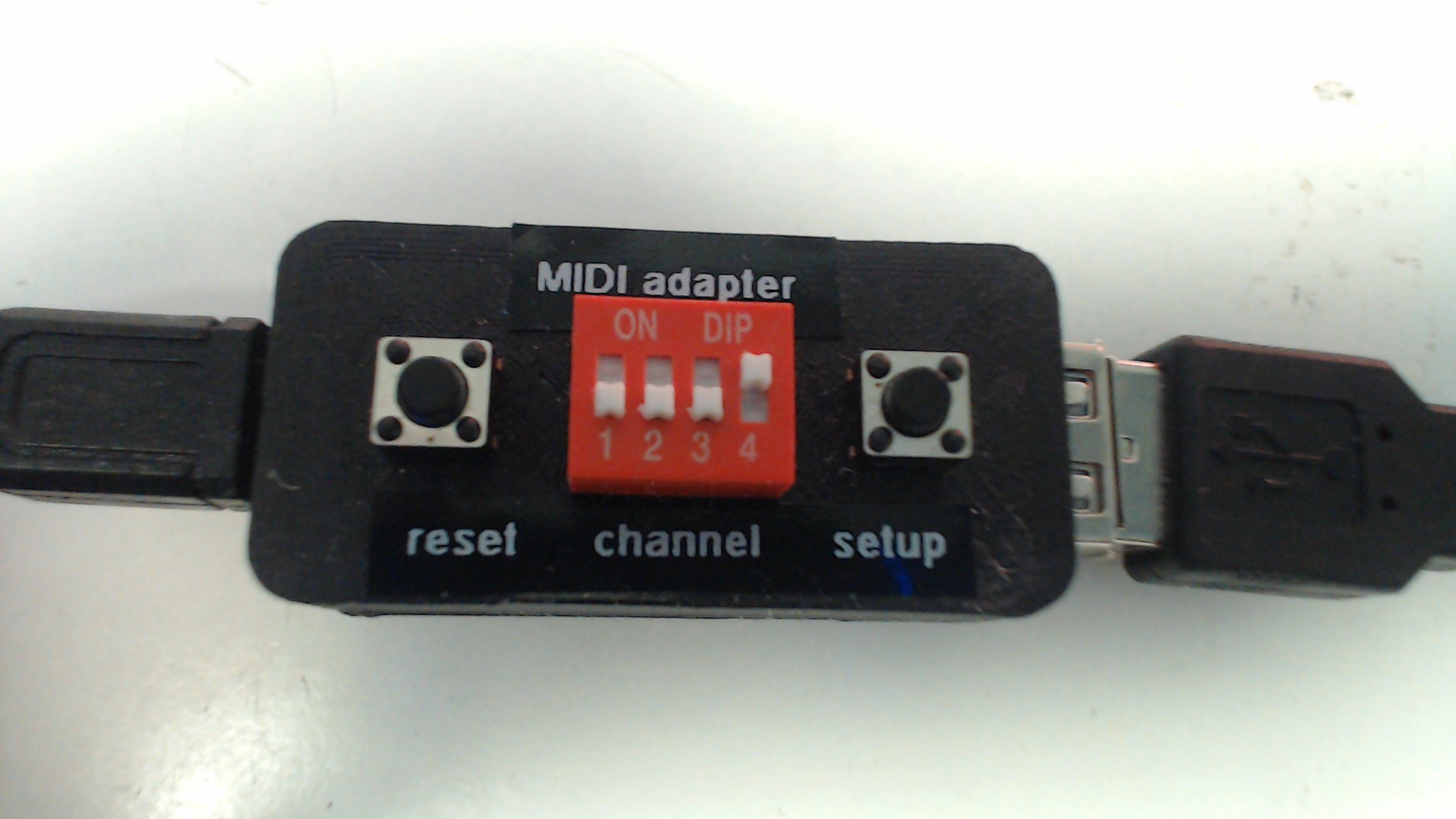
Last week I spent a day with Google’s AI (the one that pops up when you search in Google, I suppose that’s Gemini) because I wanted my USB MIDI adapter to be completely transparent and propagate the USB device name of the connected device (my keyboard, or my Akai thing).
I could not find how to do that (most sites said it was not possible with an Arduino) so I asked the AI. It helped me to make it work, by offering snippets.
The main line already worked, so I just fitted the snippets in.
That’s about as far as I want to go with AI.
I like programming, and for me the process is more important than the final product. I’m therefore in no hurry. I find it far more satisfactory to find a solution myself, other than get all the code done by AI. For me that is no fun at all.
These questions are rather irrelevant for me. The Google thing works fine for my purpose.
That’s my story too. I ask questions and AI gives answers that are almost always wrong or not quite right, but which also give me helpful information I can use to solve the issue. I also use it as a memory bank. “In this language, how do I do X?” which is just a bit different in the half dozen languages I use these days and now retired I just can’t be bothered to memorize it all, or use it often enough for it to be reflexive (like using vi, or coding in C, may it rest in peace.)
I don’t think it’s exactly Gemini, because all my devices keep imploring me to set up and enable Gemini, which I won’t do until I’ve researched it more to have a clue about it. But who knows? I just call it Google AI.
In any case, I remind myself that if it’s free, then I’m the product.
AI is absolutely wonderful for all those bits round the edges like log rotation file and backup handling, deploy scripts and consistancy acros code bases.. It has unlimited patience that frequently the human mind refuses to waste on task that aren’t often perceived as on the main path, and will get finished . . .. .
Eventually.
IT’s also wonderful for taking a well structure request and rendering up a code base that would take me a week of frustrated edge case elimination. And if you want test suites writing it’s pretty good at that too.
So preserve your coding mojo but get it to write the tests at least.
Although it does all of these mundane tasks with an attention to detail that our forefathers could only have dreamed of, it can be inconsistent with it’s results. Give it a task with a binary responses, like"does this set of tests pass?" and it will perform well. Give it a more creative role and it may give different response each time.
I use it as a tool to automate boring tasks. I sometimes use it as a lazy replacement for research, e.g. Google search to answer a question I may already know the answer to if I spent some time and paper on calculating the answer. (Yes, that makes me lazy but, “I choose a lazy person to do a hard job. Because a lazy person will find an easy way to do it.” -Bill Gates.)
I use it to wireframe ideas so that I have something tangible to work on more quickly. As I age, find it more challenging to retain ideas on my head and do a long session to wireframe something can be challenging and I kinda need something tangible before I can refine functionality.
I use it to solve awkward problems, ones that I am struggling with or don’t know what to begin, e.g. the code is too obscure for my little brain. I tend to rework such code so that I understand it and have ownership. This often leads to a complete rewrite.
For some projects that I have little investment, e.g. a tool required for a specific problem, I may let the LLM do the whole thing based on my requirements, including documenting, implementing tests, etc. examples of this include a webpage MIDI monitor and sender. The result is far prettier and functional that what I could have mustered.
I am aware of the environmental impact of this so yet to reduce the wastage but still feel some guilt at my contribution to our planet’s demise.. well actually probably just the current inhabitants - the planet will bounce back once it has erased the nuisance.
I didn’t find time to investigate workflows for using AI and it’s consequences. Because up to this point I still hesitate to give any AI model any write access to any of my systems I only used Claude inside the browser chat for some specific questions. I don’t trust that thing until I understand how it interacts with my data.
Coding: Claude Code with Opus 5.5 / Sonnet 5.5. I really love Claude Code harness. It’s the best i’ve tried.
Video-tutorials: For the zynthian Academy project i decided to test something different and i’m using OpenCode with DeepSeek 4 PRO.
SysAdmin: Same combination, but also use Haiku subagents for inspecting logs and highly repetitive tasks.
Translation: I’ve created a set of automated translation scripts for the website and the help pages. For these i use OpenAI models, Sol and Luna.
Discourse Spam Detection: OpenAI’s GPT 4
Text to Voice: I’m using local models Kokoro-82M, XTTS-v2 and Piper.
Voice to Text: Whisper variants.
I also did some tests running big free models in cloud GPU instances. Just to learn. You need a constant load of AI work to get profit from this. Perhaps in the future i could test again.
Of course. All harnesses integrates a set of default skills that you use out-of-the box.
Skills are “distilled context and instructions for realizing a specific task”. Creating custom skills is a good way of saving tokens and BTW, you get the task done faster and better.
Also, sharing skills is a good way of sharing “AI-know-how”, so decided to create some skill for zynthian. They are included in the zynthian-ui repo now as I already explained in other thread.
I suppose you say “agent” to mean “harness”. Nico, I friend of mine who is a master of AI technology show me the word, and i found it quite enlightening. This is what he teach me while eating some “tapas”:
LLM => the model all we know about. It normally runs in some remote facility, in monster GPU hardware. The minimum hardware to run a “frontier” model cost over 1.000.000 € and consumes about 20KW.
Harness => the software framework that interfaces with the LLM. Most LLMs use standarized APIs, so you can connect any LLM to any harness (well, this is not 100% accurate). Harnesses implement the “agentic loop”. The agentic loop is the algorithm used to “do the task” we want the AI do.
Agent => an instance of the “agentic loop” that runs in the harness framework.
The agentic loop typically works like this (very simplified version, of course!);
User Prompt
Compose the prompt for the LLM:
Add system prompt => The basic guide instructions for the LLM
Add user prompt. What you wrote in this iteration. It could be a request that sets the goals for the LLM or additional info (answering questions from the LLM)
Add context from the session history, project memory, relevant skills, etc.
Add the output from the tools executed in previous iteration
Add the list of available tools that are relevant in this context
Send the composed prompt to the LLM
=> [ LLM PROCESSING ] =>
Receive the LLM response that can include request for executing some tools, spawning subagents to do subtasks, etc.
Execute the requested tools, spawn subagents, etc.
GOTO 2 , until the LLM response stop requesting tool execution
GOTO 1
Probably you already know all this, but for me it was a key info to start understanding how all this AI stuff works. Writing all this here has served to clarify still more my ideas and perhaps could help someone to understand all this “magic stuff”.