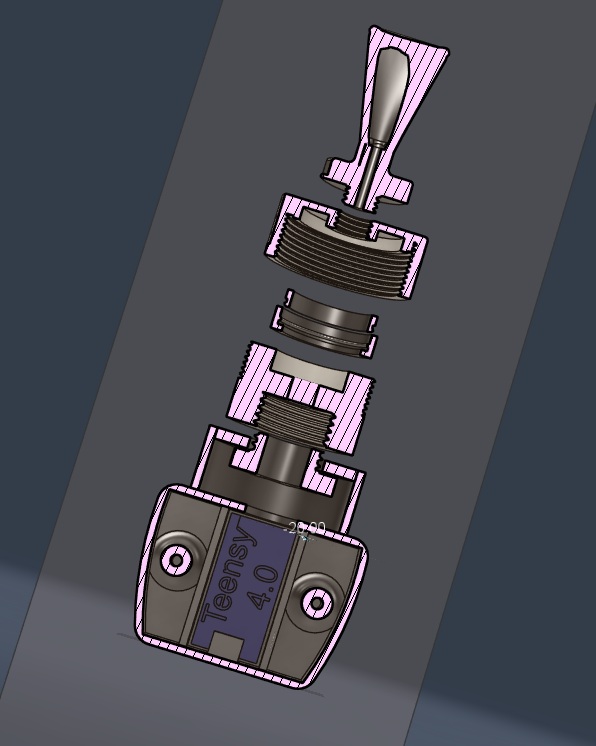
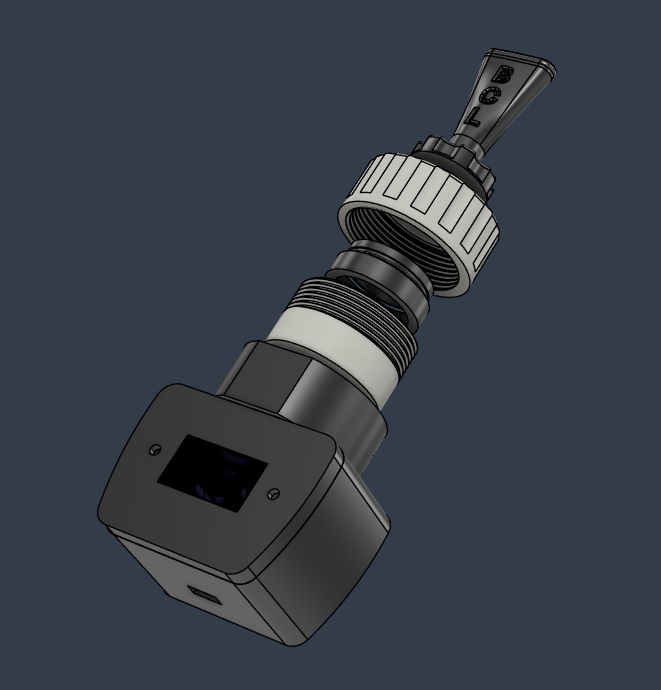
Once V2 was finished, I modified everything… Since the membrane didn’t work well with the pressure sensor, I thought I’d try adding a different sensor, namely a distance sensor (CNY 70). This way, the movement of the membrane, which I made with different hardnesses, will be “seen.” I took inspiration from a YouTube video.
1 Like
If you want to make a wind controller that does not expose the sensor to humidity, you may find a solution with the Venturi-Effect. So measure a negative pressure in case of airflow that is proportional to the amount of airflow. With a small side entry to “wash” or rinse the sensor port with a small amount of incoming ambient air, there will be no buildup of any goo that comes along with the measured airflow.
Wow! Great Giovanni Battista… but it’s getting complicated for me to create a Venturi tube. I think the membrane, which isolates the sensor from external agents, is the best solution. But thank you @fussl for allowing me to read about what this other genius has discovered and studied.
1 Like
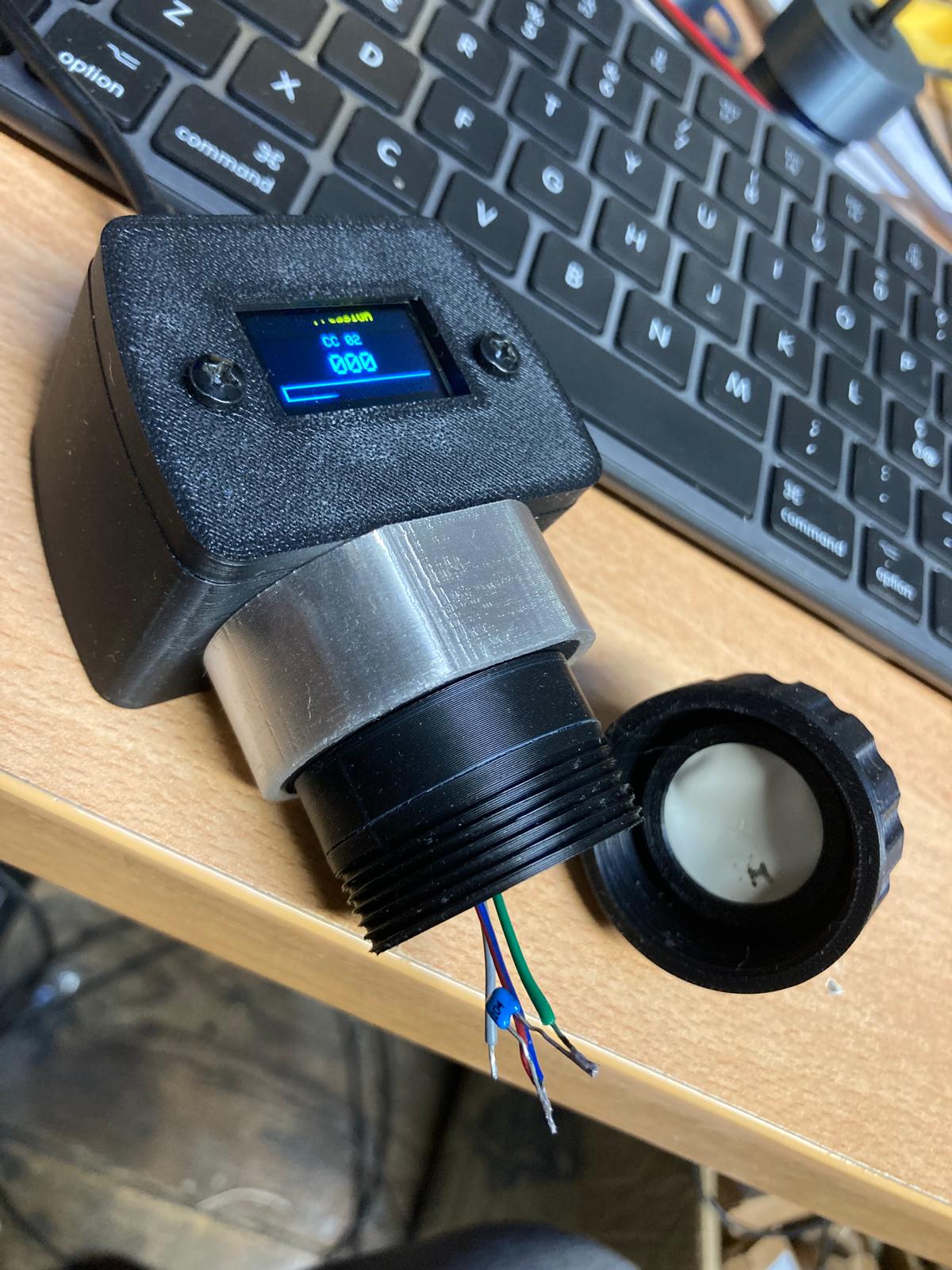
The mechanical part is finished with almost all the electronics (a few things, a Teensy 4.0, an OLED display, and the missing sensor). I’m waiting for the sensor. The membrane you see is a bit loose by design. But I have others ready with different hardnesses to test.
1 Like
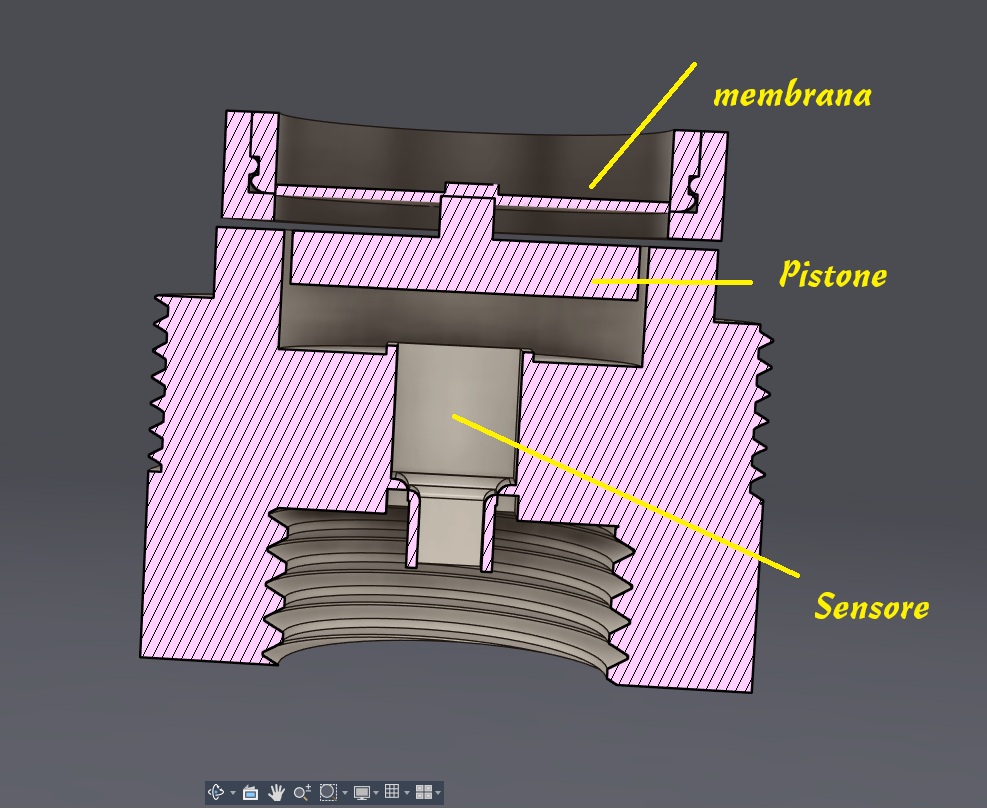
I changed my mind again… since the CNY70 requires reflective material, I printed a piston and glued a piece of tinfoil underneath (but on the opaque side). Now the membrane moves the piston, which brings the reflective paper closer to the sensor with a stroke of about 2 mm (adjustable with a shim). This way, you don’t have to blow like crazy to move the membrane. Mechanically, it works well… we’ll see as soon as the new sensor arrives…
Below is a cross-section of the new mechanics and a video of how it works…
4 Likes
The sensor has arrived… now I have to find my suitcase of discrete components, which is very difficult after moving house.
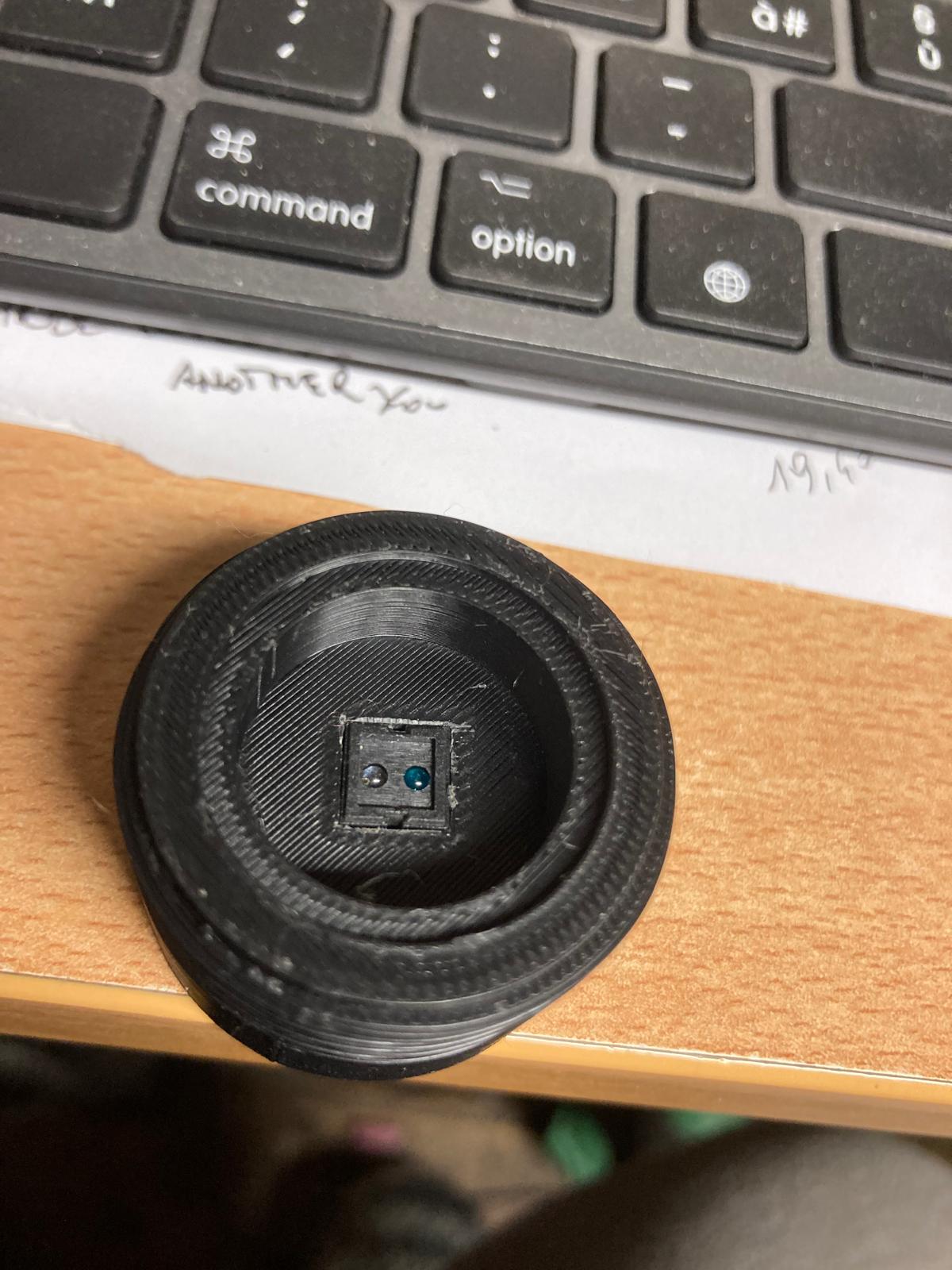
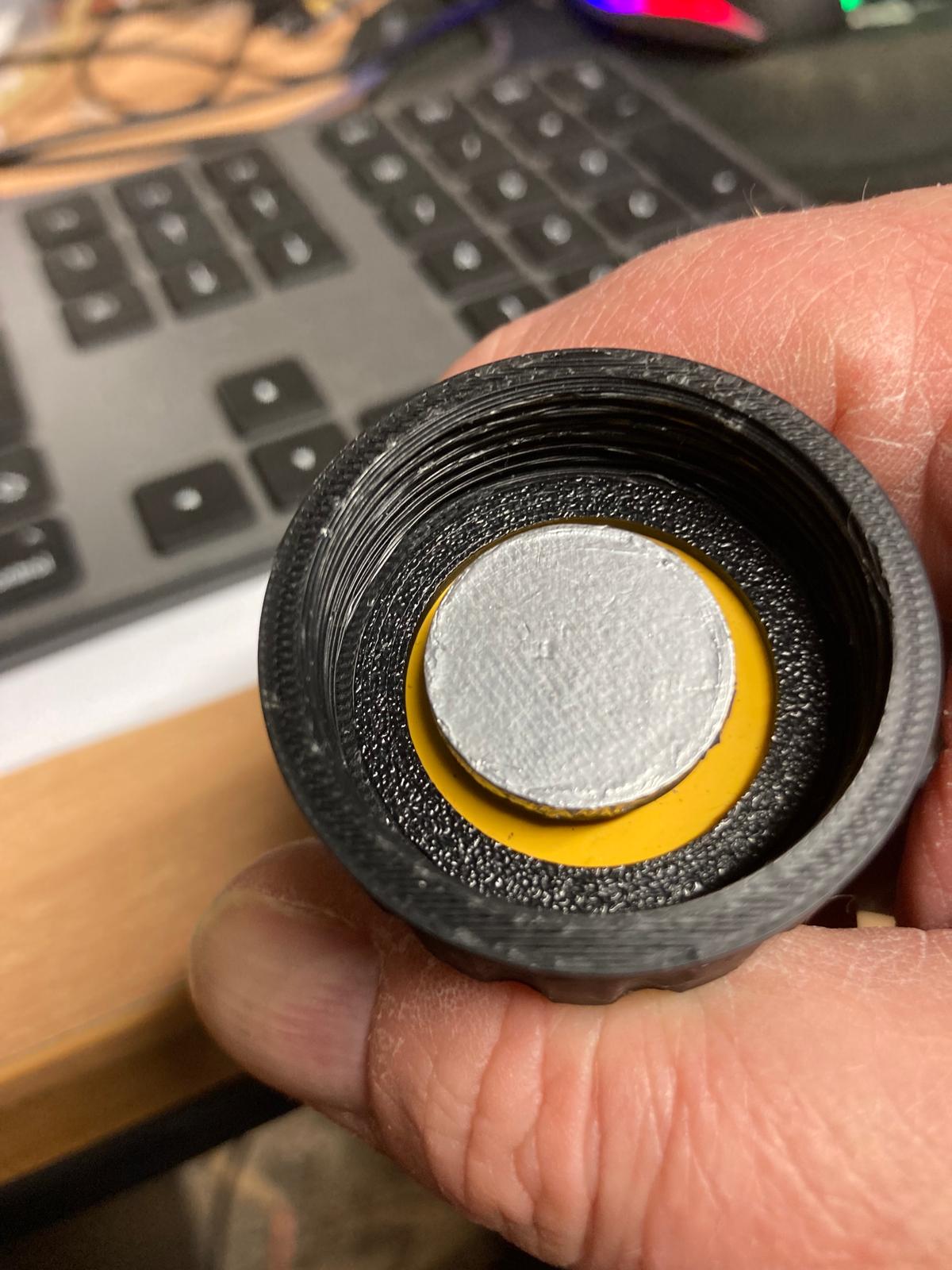
1 Like
It works very well… the mechanical part is perfect and after some adjustments to the firmware it now plays really well.
Breath_controller_Teensy_4.ino (3.1 KB)
5 Likes
I quickly recorded this beautiful piece, “Estate” by Bruno Martino, to see how my breath controller works. I’d forgotten how hard it was to breathe at specific moments during the performance…
Piano: PianoteQ 9 (on Zynthian)
Sax: Tenor SWAM
Bass: Omnisphere Trilian
Drums: Toontrack
10 Likes
I modified the sketch (with the help of the AI… which must be very good, but if you don’t give it all the information it can do a lot of damage…) to create an effect that’s essential when playing a real wind instrument: the “Tongue” effect. Without this effect, there was basically a constant increase in volume, whereas on a real instrument, a flick of the tongue gives an instant boost in volume. The “Vibrato” also seems to work well.
2 Likes
Just perfected the “Tongue” feature… and it works great. I’ve now ordered a Raspberry Pi Pico, which costs a third of what it costs, and should work better than the Teensy, which costs too much to make, even to sell.
3 Likes
Wow, this is so inspiring and great! What I find really interesting: The parameter readout seems like the release phase is too long after you stop blowing or there is any parameter smoothing involved, but your audio example clearly shows that you managed to get an incredible amount of ADSR envelope realism. Or in other words: It sounds great!
2 Likes
Many thanks @hannesmenzel, the fact that they changed the entire project to use a CNY70 sensor drove me crazy, but I really like the result. I’ve seen projects that used this optical sensor, but the standard membrane mechanics made it a bit less responsive… adding a piston with reflective material to the membrane changed everything, making the controller very precise. The construction difficulty doesn’t change much.
Another thing I’m proud of are the two rings that fit together to hold the membrane. They’re 3D printed and are PERFECT. Let’s just say that my 12 years of experience with 3D printers, now that I have an “easy” printer like Bambulab, have been very useful.
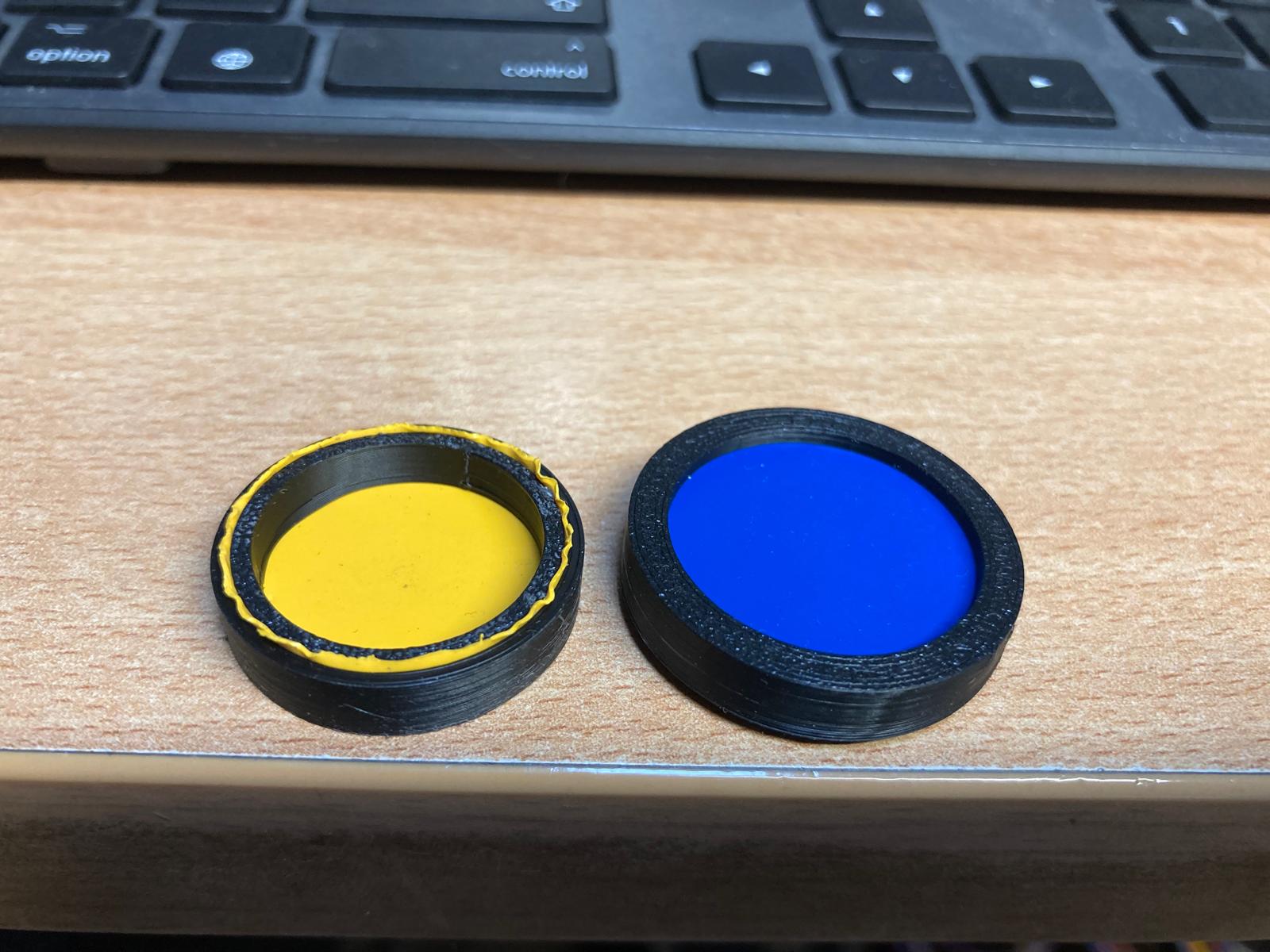
2 Likes
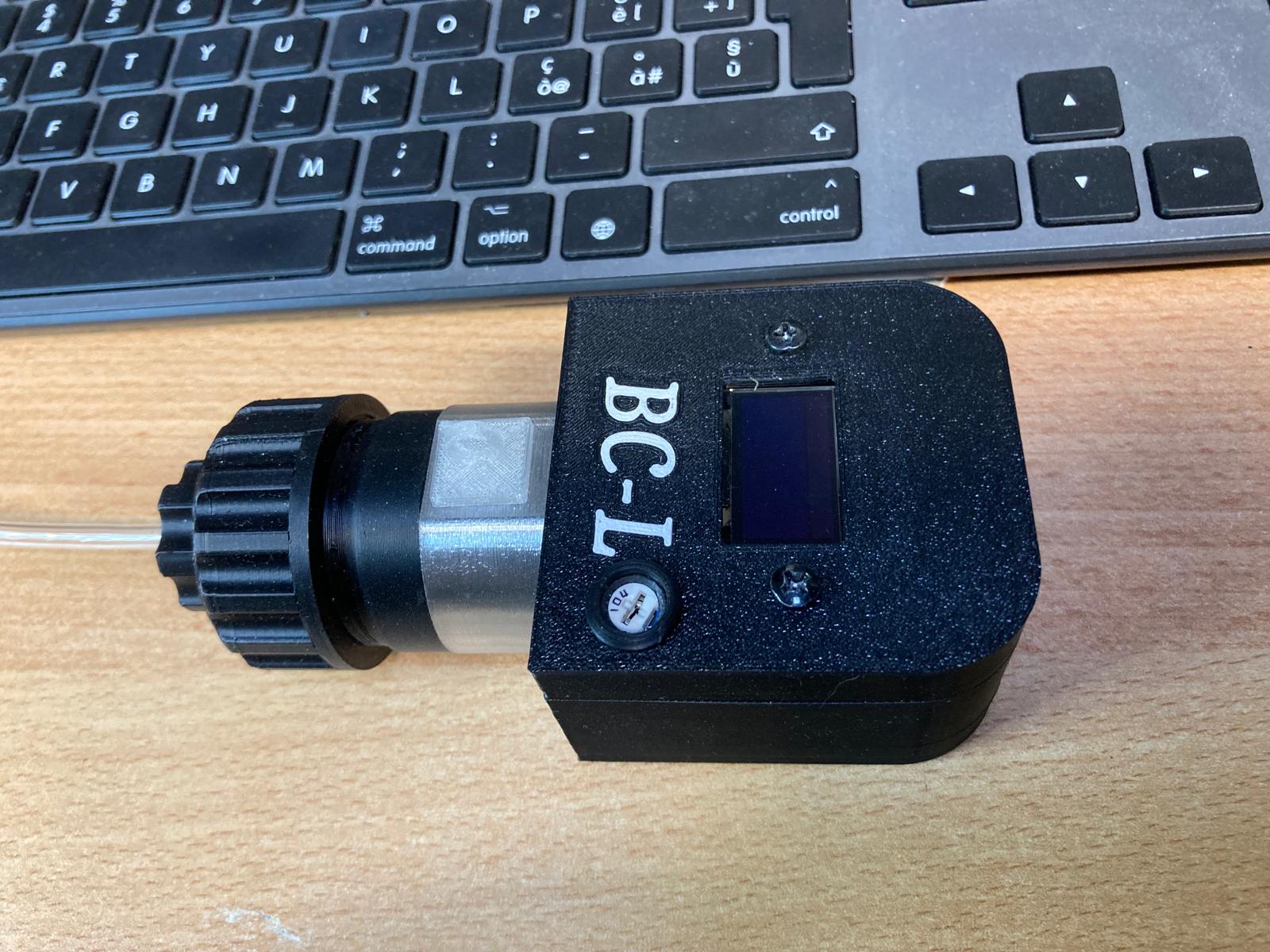
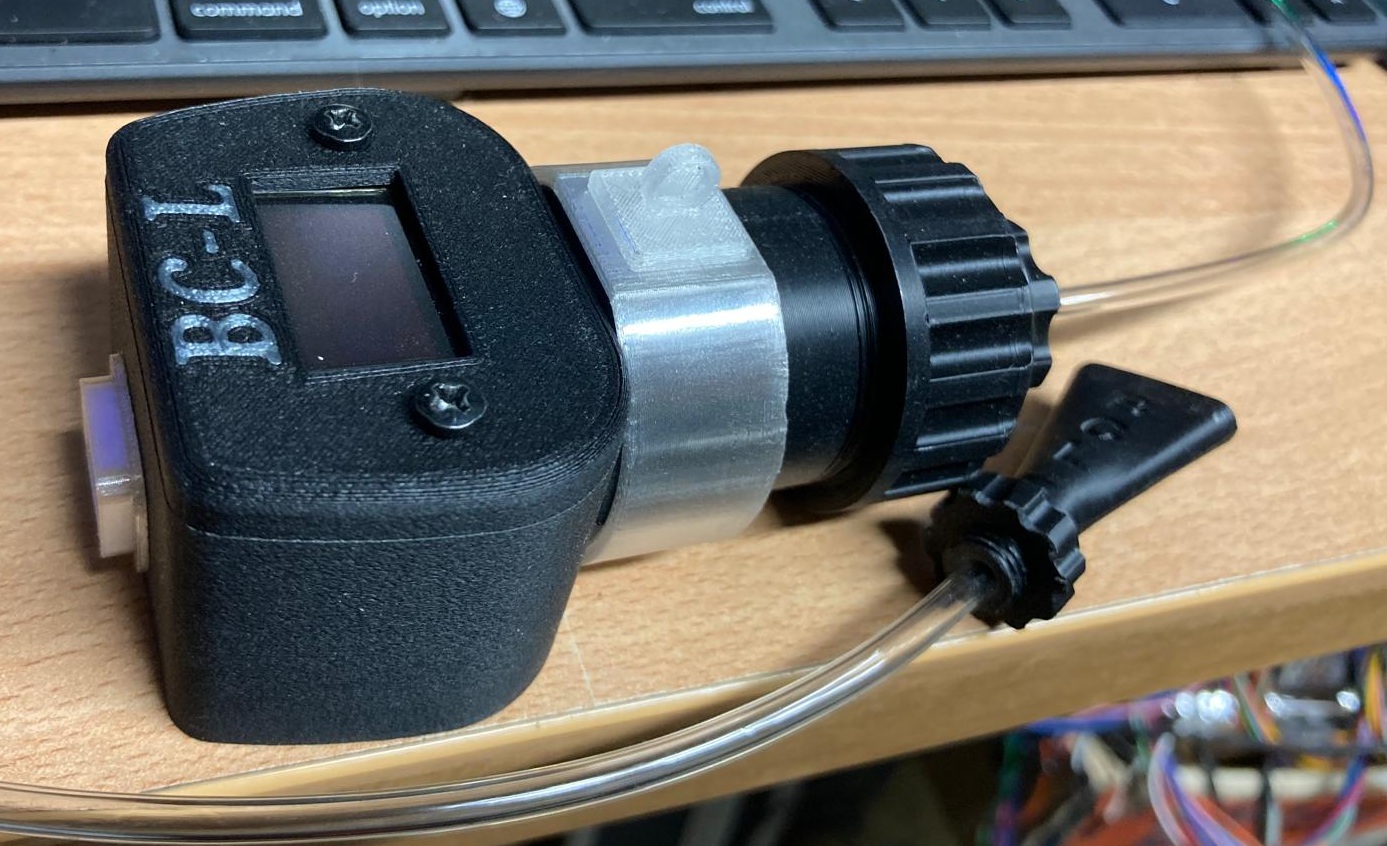
Here’s the final version of my Breath Controller V3.0. I ultimately opted for the Teensy 4.0 for my controller. The Raspberry Pico one works well, costs almost half as much, but the Teensy’s responsiveness is unmatched with the same firmware.
I printed the container with PLA Carbon which gives it a more “rough” look, while the mechanical part is in PETG for robustness.
The ring on the mouthpiece is used to adjust the opening of the vent hole.
8 Likes
Bravo Lanfranco, final cost to make it ?
Unfortunately, the Teensy 4.0 costs more than 40 euros, the sensor costs 5 euros, the display (not necessary) about 8-9 euros, I had a couple of ceramic capacitors, two resistors and an electrolytic capacitor in the drawer, the printing material and a lot of patience are not perfectly calculable… but let’s say it’s easily under 100 euros. I paid 130 euros for a used Yamaha BC-2 and in my opinion mine works better… I think it’s worth building it. If you buy everything in China, the prices are lower.
1 Like
Maybe a cheaper microcontroller would work. Could the Raspberry Pi Pico be up to the job? Or a STM32 or similar? Why did you choose the Teensy 4.0? It doesn’t seem to be doing too much work.
Hi @riban, I made a model with the Raspberry Pico (You see it a couple of posts above), but it doesn’t work as well as the Teensy… the firmware probably isn’t up to par. I had AI help moving the same sketch from the Teensy to the Pico, but I’m not skilled enough. The result was disappointing. I haven’t tried the STM32.
As a former trumpet and saxophone player, I find the Teensy closer to reality… but don’t ask me why…
This does seem to be the sort of thing the Pi Pico PIO state machines were designed for, and they go like greased weasel poo (*). . .
(*) A lapsed imperial unit dating to the early Sheffield Steel Works.
(*) This strange unit of measurement is probably applicable to my knowledge as a programmer…