I’m not happy with the 9, I’m really happy with Pianoteq, but I repeat, my ears aren’t sensitive enough to hear the most intimate subtleties. I’m happy with the response the notes have compared to my master keyboard. With other VSTs, the response wasn’t as precise, and the dynamics had less authentic limits. I don’t know if the translator captures what I’m trying to say… I’ll send you this sentence in Italian as a personal message.
2 Likes
what do you mean as narrative timbre?
I agree with you. Somehow the instruments sound a little muffled (not so bright). Strangely when I throw the sounds in a Fourier analyzer there is nothing wrong with higher frequencies.
All in all I still like the piano sound of the Salamander in my old home-made SamplerBox better than tne PianoTeq.
Kind regards,
Hans.
1 Like
This changed for me when I replaced the awful AKG K121 Studio headphones with the Audio-Technica ATH-M50x. It always depends on where the sound comes from. But I repeat, my ears aren’t very sensitive after a double ear infection from a very deep scuba dive. Youthful mistakes.
2 Likes
Hi  ,
,
I mean that acoustic sounds emulated through digital synthesis fall in two categories, at least in my opinion:
-
Timbres that deliver realistically only in the context of a larger canvas/arrangement.
-
Sounds capable of sustaining completely the dynamic and timbral requirements of solo writing, like, say, a Bach fugue, a Beethoven sonata a Debussy prelude or a Keith Jarrett concerto, to name a few genres.
Narrative piano timbres belong in the second category, from my standpoint, since they can offer a complete and plausible musical development on their own.
Cheers!
3 Likes
Actally, everyone using the same plugin or the same presets are using the single one same analog instrument that is recreated by the emulation. But in nature, every instrument is a little bit different from the others, even of the same manufacturer and series.
And everyone who uses a preset plays that one single instrument exactly the same way, regarding nuances and expressions, because there can only be a limited set of such things be recorded or emulated using programming and every given expression during play maps into their nearest bracket.
And then, even more with seuencer or DAW, everyone uses the exact same quantized timing, or the exact same humanization.
There is no escape, other than playing an original analog instrument.
Maybe?
3 Likes
The beauty of pianoteq and similar modelling instruments and effects is that they model using variable parameters. So you can have infinite variation, more so than on an individual instrument. I’m not a virtuoso musician. I find Pianoteq wonderful. It is the most realistic piano in my toolkit and sounds much better than the beat-up upright that I used to have… although there is a real charm to the acoustic properties of a real instruments. Even the sound of the strings vibrating as I walked towards it was a pleasure.
6 Likes
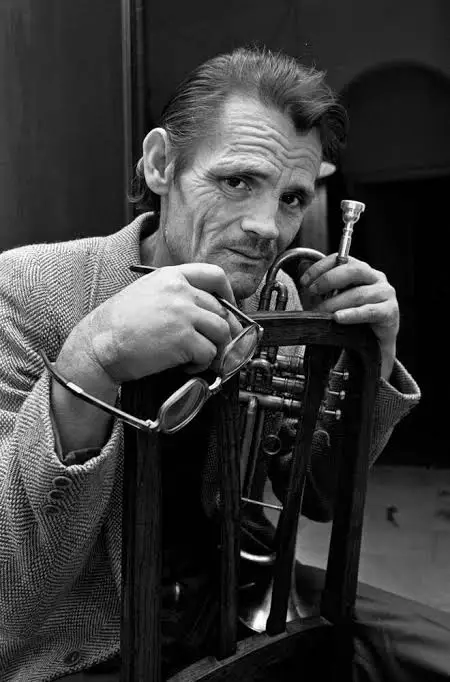
I agree with @riban. You have to keep in mind, though, that if we gave Chet Baker a piece of stovepipe, he’d still get a better sound out of it than I ever did with my Bach Stradivarius trumpet. 
3 Likes
1 Like
Ahhhh my Google English… I edited my sentence above… I don’t think it was clear before.. I hope it is now. 
1 Like
Indeed @riban: I always admired the ability of the PT physical model to render an infinite gamut af dynamic and timbral variations, from pppp to ffff. This has always been the strongest sweet spot of this genius engineering feat, with a small software footprint thanks to the sophisticated underlying mathematical theory.
As a portable sw piano, able to run viably also on small and relatively inexpensive laptops, PT is unbeatable.
What I think is not yet there is the subjective sense of harmonic weight, that should follow accordingly the subtle dynamic response which PT is justly renown for.
To my ears and for my usage, the spectrum comes out as a bit lean, lighter than I expect a classical piano to be. By the way, in general I am a huge fan of the bells/metallophones/vibraphones/tynes synthesiser category, for providing arrangements with rhythmic articulation and upper-end spectral shine.
As for the PT piano sound per se, I perceive it as slightly lacking “wood” and “gravity”, especially in slow static harmonies, because this is where its (otherwise miraculous) mathematical framework becomes audible. Where it excels instead is in definition and transparency of articulation, which is why I see it very fit for songwriting, and contemporary and Jazz arrangements.
Anyway, the beauty of freedom (and Zynthian) is variety, and thus: long live Pianoteq!
Cheers
1 Like
Ah… maybe not a better sound, but certainly great music. That’s something that we often overlook, when we get lost in deep technicalities, neat yet not necessarily important to create art!
I totally agree with you.
Creativity should come first but there is a reason that Clapton doesn’t play a Kay guitar. We should aspire to providing the best range of tools to better facilitate user’s inspiration.
2 Likes
Especially on acoustic or electro-acoustic instruments there are musicians who you recognize on the fly for their physical approach to instrument; for example Thelonious Monk on piano and his acid and pungent sound or Jaco Pastorius on electric bass.
On electronic instruments this personal imprint is a little more difficult to discover and then the articulation of the phrases remains important.
That is why I prefer software tools that offer deep dynamics, complex sound and allow greater interaction between sound and physical interface: I think PianoteQ offers this.
The final sound seems to be on the acoustic piano, Rhodes, etc. (it is important to me but not fundamental) but above all it allows for this physical depth. Furthermore I like the physical modeling instead millions of samples.
It would seem that I have superfine ears and hands but believe me it’s not like that unfortunately.
Hi All
I tried updating with the new release yeasterday, and this is how it went:
After reboot i could not load any snapshots with PT, and PT was not found when i tried to add a chain. Webconf was not working. I got webconf working by starting it again in terminal, and installed PT vers 8.something. After reboot snaps with PT was loading and PT was back to normal i guess. But Webconf still not auto starting, i still need to start it in terminal.
I dunno what happened here, and i’m tempted to do a fresh install.
I also noticed that i could not record sustain pedal in ZynSeq. Maybe i was never able to do that, but i have a clear feeling that i could before. And the funniest thing, when my sequence was running i could press down the sustain pedal and i worked on the sequenced notes. And some of my sustain pedal activity was actually recorded to the sequence. But not all.
Please do not feel obliged to try and “solve” this, i can happily do a clean install. But o.c. if anyone has anything readily at hand that can shed some light of my mystery, without causing to much disruption or grievance in regards to other daily activity, please do
EDIT: I’m on the latest Vangelis
Zynthian V5 kit rpi5
I had the exact feeling (I updated to V9 and did not roll back because I did not use snapshots at all). I was wondering if it was working before to record sustain pedal information. I was wondering if in the process of looped recording into a clip the not-pressed pedal (CC64=0) in the next looping round is overwriting the recorded information?
That could’ve been the case, but i think i just tested it not to be. I stopped the sequence right after recording, and problem persist
And it also shouldn’t do this anyway because I think that only CC changes (not states) will be recorded. But I also recorded some piano yesterday and noticed the lack of sustain information, but I really cannot tell if it was like this before in V8.